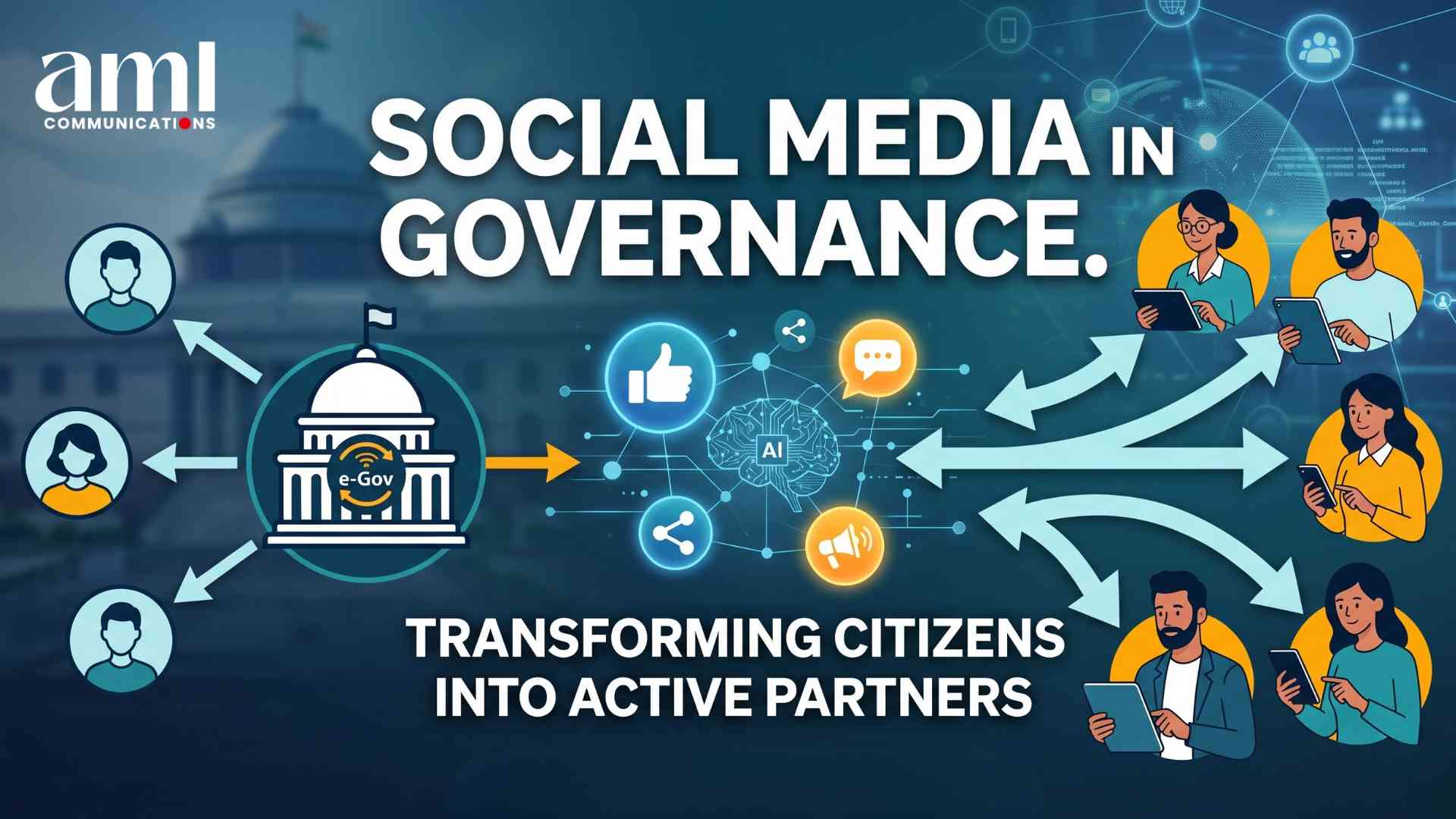
As modern governance shifts from one-way broadcasting to transparent, two-way dialogue, leveraging social media and artificial intelligence is now an essential mandate for transforming passive citizens into active partners in public administration
Nilambar Rath
Why has communication become so vital in government organizations? Modern governance is no longer just about administration and file movement; it is about perception, participation, and partnership. A policy is only as effective as the public’s awareness of it.
Today, government communication operates across three distinct, overlapping tiers.
First, there is Stakeholder Communication, which acts as the foundation. This involves targeted Information, Education, and Communication (IEC) and grassroots consultations. It is about speaking directly with community leaders, stakeholders, and local panchayats to build consensus before and during policy implementation.
Second, we have Mass Communication, often viewed as the broadcast tier. This is the traditional Public Relations (PR) and Advertising tier. It involves using newspapers, radio, and television to create macro-level awareness about major government schemes, such as announcing a statewide public health initiative or an infrastructure project.
Third, and most crucially for our modern era, is Digital and Social Media Communication, which serves as the dialogue tier. Through e-Governance portals, official mobile apps, and social media handles, the government shifts from a “broadcaster” to a “facilitator”. It allows for real-time, two-way engagement directly with the citizen right in their pocket.
In this landscape, why is public service communication so critical, wonderful, and sensitive? Effective service delivery is the backbone of any state’s economy and social well-being. Government departments do not deal with abstract concepts; they deal with human livelihoods, safety, and dignity.
This makes public administration a uniquely powerful subject for a communicator. Citizen welfare serves as the economic engine. Ensuring the safety, health, and equitable access to resources for all citizens is fundamental to the state’s growth and stability.
Furthermore, public policy is a ‘wonder’ for storytelling. It is a goldmine for impactful communication. It offers the chance to tell deeply human-centric stories, transforming a dry policy document into a compelling narrative about a citizen securing a better future for their children through various welfare schemes. However, this also brings a strict sensitivity mandate. Because these subjects touch vulnerable populations, the stakes are incredibly high. A poorly worded post about public safety, service outages, or civic emergencies can easily spark panic, protests, or political backlash. Therefore, as communicators, officers must be highly responsible, legally precise, and deeply empathetic in every single message they put out.
Block 1: The Foundation and The e-Governance Mandate
The Paradigm Shift and The Rise of e-Governance: We are no longer just digitizing physical files; we are in the era of active e-Governance. e-Governance is fundamentally about transparent, citizen-centric service delivery.
In this context, social media is no longer just a public relations tool, but the direct, digital front porch of the government. Traditional mass media functions as a one-way street for broadcasting, whereas social media is a dynamic two-way dialogue. It shifts the power dynamic from talking at citizens to engaging with citizens, making public policies and programs highly accessible, immediate, and participatory.
The Ecosystem: Content, Technology, and Audience
Technology (The Algorithm): Platforms are governed by algorithms that reward engagement, such as likes, comments, and watch time. If people do not interact with your content, the platform suppresses it. You are competing for attention not just with other departments, but with global entertainment and news.
Audience Behavior: Attention spans are incredibly short, often giving you under three seconds to make an impression. Audiences expect information to be visual, hyper-relevant, localized, and easily digestible on a mobile screen.
Platform Mapping: Where to find your audience
X (formerly Twitter): The digital noticeboard. Best for real-time updates, official policy announcements, and engaging with journalists, policymakers, and influencers.
Facebook: Mass community reach. Excellent for detailed infographics, regional language content, and reaching a broader demographic across grassroots and semi-urban districts.
Instagram: Highly visual, younger demographic. Perfect for Reels, behind-the-scenes content at community outreach events, and visual storytelling of successful government interventions.
LinkedIn: The professional network. Best for B2B communication, highlighting department achievements, and connecting with corporate partners for regulatory compliance and industry collaborations.
WhatsApp: Hyper-local, direct broadcast. Best for sharing critical updates directly to targeted citizen groups, community leaders, or beneficiary networks via official channels.
YouTube (Streaming Platform): YouTube is the world’s second-largest search engine and acts as the permanent archive for your department. Best for long-form content, detailed step-by-step tutorials, recording webinars, and building a searchable, evergreen repository of government schemes.
Technical Basics: Accounts vs. Pages
There is a fundamental difference between personal accounts and official pages. Personal accounts are for individuals, offering limited friends, no analytics, and no advertising capabilities. Official Pages are designed for organizations. They offer deep backend analytics, allow multiple team members to manage the handle securely, and permit paid boosting. Government entities must strictly operate as Pages to maintain institutional continuity when officers get transferred.
The Government Mandate: Core Differentiators
Corporate social media seeks profit, while personal profiles seek clout. Government social media must prioritize public service, neutrality, and accountability. Every post must be accurate, unbiased, and serve as an unquestionable source of truth. Your content must be inclusive, ensuring it reaches marginalized citizens just as effectively as key stakeholders.
Block 2: The Craft, Content, Strategy, and Engagement
- The Engagement Formula: To avoid becoming a boring digital noticeboard, your content needs to follow a structured formula:
- The Hook (First 3 seconds): A compelling headline, a striking visual, or a direct question.
- Value Proposition: What is in it for the citizen?.
- Simplicity and Empathy: Use plain, conversational language. Strip away complex bureaucratic jargon and speak to citizens, not above them.
- Call to Action (CTA): Never leave the audience guessing. Tell them exactly what to do next, such as clicking a link to register.
Curation Tactics: From Circular to Story
Turn dense policy circulars into bite-sized, engaging knowledge.
- Infographics: Break down statistics, eligibility criteria, and financial benefits into highly visual, color-coded graphics.
- Human-Centric Storytelling: People connect with people, not policies. Use photos and quotes of real beneficiaries with consent to show the policy actively working on the ground.
- The “Five Ws”: Ensure every caption answers Who, What, When, Where, and Why immediately.
The Power of Video
Short-form video is the king of current algorithms. Keep content under 60 seconds for maximum retention. Always use large text captions or subtitles on the video. Over 70% of social media users watch videos on mute while commuting or working, making visual cues mandatory.
Content Optimization and Convergence
Work smarter, not harder. A single core piece of communication should be converged into multiple formats:
- A detailed Facebook post with a link to the relevant PDF.
- A thread of short, punchy posts on X over the week.
- A simple, bold graphic for Instagram.
- A 30-second explainer video for YouTube Shorts and Instagram Reels.
Amplifying Reach: Organic vs. Inorganic
Organic Reach is the free distribution your post gets based on the algorithm, which is notoriously low today. Inorganic or Paid Promotion involves paying the platform to bypass the algorithm and show your post to a highly targeted demographic. For example, you can spend a small budget to show a scheme registration deadline only to eligible beneficiaries aged 18 to 45 living within a specific radius. This is highly cost-effective for targeted awareness.
Block 3: The Impact, Campaigns, and Behaviour Change
Amplifying the Message: The Social Media Campaign
A single post is easily forgotten, but a campaign creates impact. A campaign is a sustained, multi-week effort with a single goal and a unifying hashtag. It involves a Teaser phase, a Launch phase, and a Sustenance phase for sharing beneficiary stories, FAQs, and reminders. It builds momentum through repetition.
Driving Action: Social Behaviour Change Communication (SBCC)
Social media is a psychological tool to shift cultural norms and behaviors. SBCC moves beyond just giving information to actually changing habits.
- Emotional Appeal: Showing the real-world impact on families when safety protocols or guidelines are ignored.
- Peer Influence and Relatability: Highlighting local citizens or community leaders who champion the desired behavior.
- Friction Reduction: Breaking down a complex, intimidating process into simple, non-threatening steps.
Block 4: The Shield, Crisis Management, Trust, and Protocol
Navigating Emergencies: Crisis Communication
In a crisis, a vacuum of official information breeds panic. Speed is your shield. Utilize the Golden Hour to acknowledge the issue immediately, even if you do not have all the facts. Use platforms like X to provide authoritative, timestamped updates to media and citizens.
Establishing Authority: Combating Misinformation
Stand out in a sea of fake news by maintaining a highly professional aesthetic. Always cite your sources and link directly to official government websites. Actively call out and debunk specific fake news circulating on WhatsApp with standardized, highly visible “FACT CHECK” or “FAKE VS REAL” graphics.
Digital Identity and Verification
The Grey Tick on X or standard Blue verification badges are absolutely vital. The Grey Tick is exclusively reserved for government officials and departments, acting as your digital ID card. It immediately signals to the public that the handle is the genuine source, protecting the department from malicious impersonators.
Listening and Responding: Comment Moderation and Grievance Redressal
Managing social media is 50% posting and 50% listening. The comment section is a real-time grievance redressal mechanism.
- Establish a clear Standard Operating Procedure to acknowledge valid complaints quickly and publicly.
- Move complex, personal, or sensitive grievances to Direct Messages or dedicated offline helpline numbers immediately.
- Learn the difference between a frustrated citizen needing help and a troll seeking attention. Never argue with a troll.
The Rulebook: Do’s and Don’ts
- DO: Double-check all facts and spelling before posting. Maintain a polite, empathetic tone. Secure all accounts with Two-Factor Authentication and limit admin access.
- DON’T: Engage with political commentary. Delete negative comments unless they violate policy with abusive language or hate speech. Never post from a personal mobile device without strict security separations.
Block 5: The Future, Measurement, AI, and e-Governance
Decoding the Metrics
You cannot manage what you do not measure.
- Reach: The number of unique individual screens that saw your content.
- Views/Impressions: How many times the content was displayed, even if it was the same person seeing it twice.
- Engagement: Likes, comments, shares, saves, and clicks. This is the golden metric. High engagement means your content actually resonated and prompted civic action.
Proving Return on Investment (ROI)
Data proves the value of your communication strategy. By tracking analytics, you can see exactly which types of posts lead to spikes in website traffic or offline registrations. It allows departments to stop guessing, justify budgets, and invest time only in the formats that actually work.
Global Shifts: e-Governance as a Lifestyle
Globally, government communication is shifting toward hyper-localization. We are moving away from English-first, desktop-based websites to mobile-first, vernacular-language content. Social media integration is now a mandatory pillar of e-Governance, turning passive citizens into active partners in policy implementation.
The Next Frontier: Artificial Intelligence
An AI-First approach is becoming essential for modern administration to save time and resources.
- Content Generation: Generative AI tools can quickly draft bilingual captions, suggest campaign ideas, and summarize dense legal documents into simple social media copy.
- Translation: AI helps seamlessly convert directives into flawless, conversational regional languages.
- Social Listening: AI-powered tools can monitor digital platforms to gauge public sentiment on new policies, allowing you to address friction points before they escalate into on-the-ground protests.
Conclusion: The 10 Pillars of Social Media in Governance
To bring all these concepts together and create a lasting impact, every social media initiative in the government sector must be built upon a strong, strategic foundation. Planning and managing your departmental communication rely heavily on these ten core pillars:
- Subject: This is the foundation of your message. What is the core policy, scheme, or administrative update you are communicating?. For any department, the subject must be crystal clear, whether it is a new welfare scheme or an infrastructure update.
- Purpose: The ultimate goal. You must define what success looks like before posting. Are you simply informing the public, managing a crisis, or driving a specific action like getting citizens to register on a new portal?.
- Audience: The target demographic. Who exactly needs to hear this message?. A communication strategy meant for corporate stakeholders will look and sound vastly different from a campaign meant for grassroots citizens.
- Strategy: The roadmap. How will you connect your Subject to your Audience to achieve your Purpose?. This involves deciding on the emotional tone, the timing of the campaign, and whether to rely on organic reach or invest in paid promotion.
- Content: The execution. This is the tangible asset the audience interacts with. It includes the localized text, the clear infographic, or the engaging short video. It must be simple, accessible, and optimized for mobile screens.
- Platforms: The distribution network. Choosing the right channel for the right audience is imperative. You might leverage LinkedIn for corporate regulatory compliance, WhatsApp for direct community communication, and Facebook for reaching grassroots citizens.
- Analytics: The measurement of success. Looking closely at Reach, Views, and Engagement data allows you to see if your strategy actually worked. This allows communication managers to stop guessing and improve future public outreach.
- Trust and Compliance: In public administration, credibility is your most valuable asset. This ensures that all communication strictly adheres to legal guidelines, IT Rules, and departmental protocols, keeping the government handle as an unquestionable source of truth.
- Social Listening (The Feedback Loop): Reading the nerves of the target audience and stakeholders. True impact comes from monitoring the comment sections, direct messages, and online grievances to gauge public sentiment. This real-time feedback allows the department to course-correct messaging or address simmering issues before they become crises.
- Convergence (Online-to-Offline Integration): The reality check. Social media cannot operate in a vacuum. This pillar ensures that the digital promise matches the physical, on-ground reality. A beautiful digital campaign urging citizens to claim welfare benefits is only impactful if the local administrative offices are fully equipped, briefed, and ready to process those claims. Convergence bridges the gap between the virtual screen and actual citizen service.
By embracing these pillars, integrating AI responsibly, and shifting our mindset from broadcasters to facilitators, we can transform public service delivery and ensure that governance truly reaches every citizen.
(This article is based on the author’s presentation at the communication masterclass on the subject hosted by Gopabandhu Academy of Administration, Bhubaneswar, the apex training facility meant for civil servants by the Government of Odisha.)
(Author Bio: Nilambar Rath is a senior communication specialist, media educator, and entrepreneur. He is the Founder and CEO of aml Communications, the Founder Editor of OdishaLIVE and Co-Chair IFI Foundation.)





A complete, comprehensive and carefully crafted content. A good read. Not only the government officials or bureaucrats but also the media practitioners, mass communication students should read this.
Comments are closed.